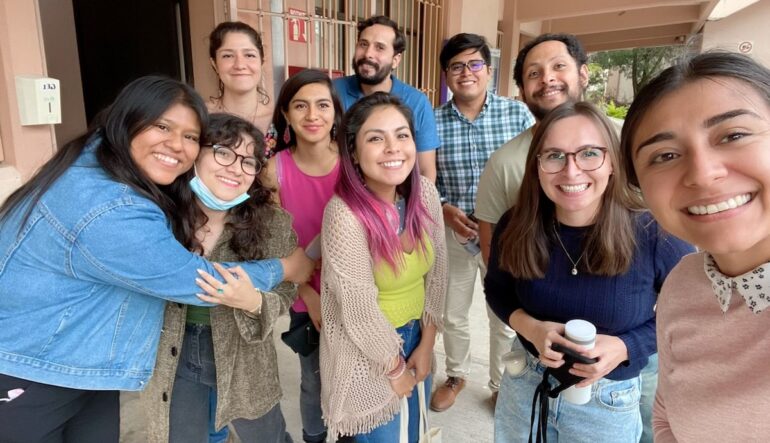
I don’t know if I’ll ever finish counting, thanking and longing for everything that the MPE (Master in Editorial Production) gave me. I know, it sounds silly. But beyond giving me the chance to turn one of the things I love most in life, editing books, into a profession and a source of income, the MPE gave me friends who very quickly became family. And that was just the beginning.
The MPE also led me to have experiences that I’m not sure I’d have dared to have otherwise: moving to another state, far from my family; discovering how much I enjoy independence and my own company; exploring corners of the world I probably would never have reached on my own. In short, it pushed me to expand the boundaries of the life I had known until then.
It also introduced me to a different kind of publishing professional: the academics who, almost every day, challenged me with the way I thought about and approached my work. Without even meaning to, they also helped me discover qualities within myself that I didn’t even know I had: the ability to stand my ground, tenacity, courage and a deep desire to be fully present in my own life.
We invite you to read: La pertinencia de existir
I came back from the MPE stronger. Or, at least, different. The person who arrived in Cuernavaca wasn’t the same one who left there in the summer of 2024, drowning in tears because it felt like I’d left half my heart in that city. A few weeks ago, someone asked me, “How do you survive life after the MPE?” My most honest answer was that I’m not even sure I’ve managed to put myself back together after that chapter of my life. And honestly, I’m not even sure I want to, not entirely.
One of the most important things I learned during those years, I owe to my thesis advisor, who challenged me in practically every meeting and constantly pushed me to face frustration head-on. To be honest, writing the theoretical framework for my project was incredibly difficult. At times I didn’t believe in myself, at others, I felt she didn’t believe in me. Either way, I always seemed to come away feeling incapable. I rewrote entire chapters several times, and there were moments when I felt like I was making progress only to end up right back where I started. And yes, I seriously considered giving up or asking the committee to assign me a different advisor. Looking back, I’m deeply grateful to the person I was back then for not going through with either decision.
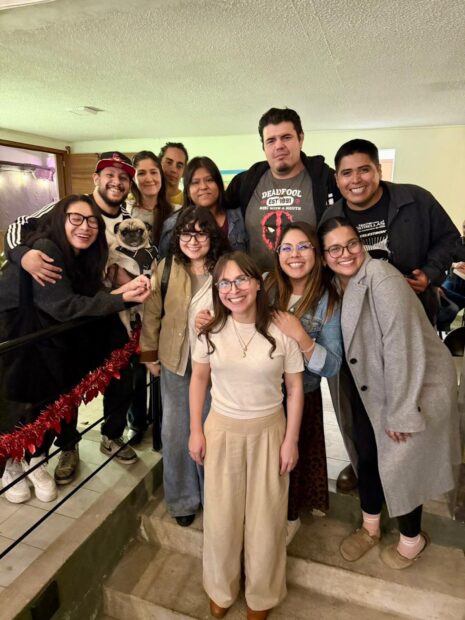
A few days ago, Irene Fenoglio, my thesis advisor, passed away. And in the numbing cold that settles into your body when news like that reaches you, my mind didn’t turn to the great academic lessons or the endless revisions of the manuscript. Instead, I remembered the times she worried about my bouts of gastritis, the moments when her honesty made us laugh, both individually and as a group, and the generosity with which she went out of her way to help me graduate as soon as possible.
What I remembered, then, was the everyday routine that brings us closer to people without our even realizing it. And, above all, I remembered the heart of a teacher who genuinely cared about a thesis student who had always been afraid of writing her thesis.
Her passing has made me realize that perhaps this melancholy and longing for the wonderful years I spent in the MPE will never quite fade. It has also reaffirmed something else: what made that program truly extraordinary wasn’t the knowledge or the job opportunities that came afterward. It was discovering, for the very first time in my life, that there was a place where I belonged without having to struggle to fit in. A place where I could be myself without pretending to be someone, I wasn’t. A place where I didn’t need to prove anything to feel part of something, and where, moreover, I felt that I had a place and a purpose within the shared meaning of a book called MPE 13; a book to which Irene was, without a doubt, an essential contributor. I suppose there are experiences we never quite return from, because a part of us decides to stay and make a home there. Or perhaps it’s the people we meet along the way who, even after they’re gone, keep teaching us how to read the pages that lie ahead.
Traducción: Pamela Contreras
-

By: Diana Ramírez Luna
Leo, luego escribo. La literatura es la mayor de mis pasiones e intento condensar lo mejor de lo que soy en ella; no sería quien soy sin las letras, mi asidero en momentos de tristeza y ancla ante la banalidad. Comunicóloga de profesión, editora en proceso, aspirante a escritora.
-

-
La pertinencia de existir
El último viaje
Desafiar al destino
Todavía significa “se termina”
¿Te acuerdas cómo nos conocimos?
See all this author’s posts